
Pollution, and climate change impacts on species distribution and abundance
Pollution, and climate change impacts on species distribution and abundance
Pollution is the introduction of harmful materials into the environment. These harmful materials are called pollutants. Pollutants can be natural, such as volcanic ash. They can also be created by human activity, such as trash or runoff produced by factories. Pollutants damage the quality of air, water, and land.
Many things that are useful to people produce pollution. Cars spew pollutants from their exhaust pipes. Burning coal to create electricity pollutes the air. Industries and homes generate garbage and sewage that can pollute the land and water. Pesticides—chemical poisons used to kill weeds and insects—seep into waterways and harm wildlife.
All living things—from one-celled microbes to blue whales—depend on Earth’s supply of air and water. When these resources are polluted, all forms of life are threatened.
Climate change refers to the long-term changes in temperature and weather due to human activities. Increase in average global temperature and extreme and unpredictable weather are the most common manifestations of climate change. In recent years, it has acquired the importance of global emergency and affecting not only the wellbeing of humans but also the sustainability of other lifeforms. Enormous increase in the emission of greenhouse gases (CO2, methane and nitrous oxide) in recent decades largely due to burning of coal and fossil fuels, and deforestation are the main drivers of climate change. Marked increase in the frequency and intensity of natural disasters, rise in sea level, decrease in crop productivity and loss of biodiversity are the main consequences of climate change. Obvious mitigation measures include significant reduction in the emission of greenhouse gases and increase in the forest cover of the landmass. Conference of Parties (COP 21), held in Paris in 2015 adapted, as a legally binding treaty, to limit global warming to well below 2 °C, preferably to 1.5 °C by 2100, compared to pre-industrial levels. However, under the present emission scenario, the world is heading for a 3–4 °C warming by the end of the century. This was discussed further in COP 26 held in Glasgow in November 2021; many countries pledged to reach net zero carbon emission by 2050 and to end deforestation, essential requirements to keep 1.5 °C target. However, even with implementation of these pledges, the rise is expected to be around 2.4 °C. Additional measures are urgently needed to realize the goal of limiting temperature rise to 1.5 °C and to sustain biodiversity and human welfare.
How is climate change affecting biodiversity?
The main driver of biodiversity loss remains humans’ use of land – primarily for food production. Human activity has already altered over 70 per cent of all ice-free land. When land is converted for agriculture, some animal and plant species may lose their habitat and face extinction.
But climate change is playing an increasingly important role in the decline of biodiversity. Climate change has altered marine, terrestrial, and freshwater ecosystems around the world. It has caused the loss of local species, increased diseases, and driven mass mortality of plants and animals, resulting in the first climate-driven extinctions.
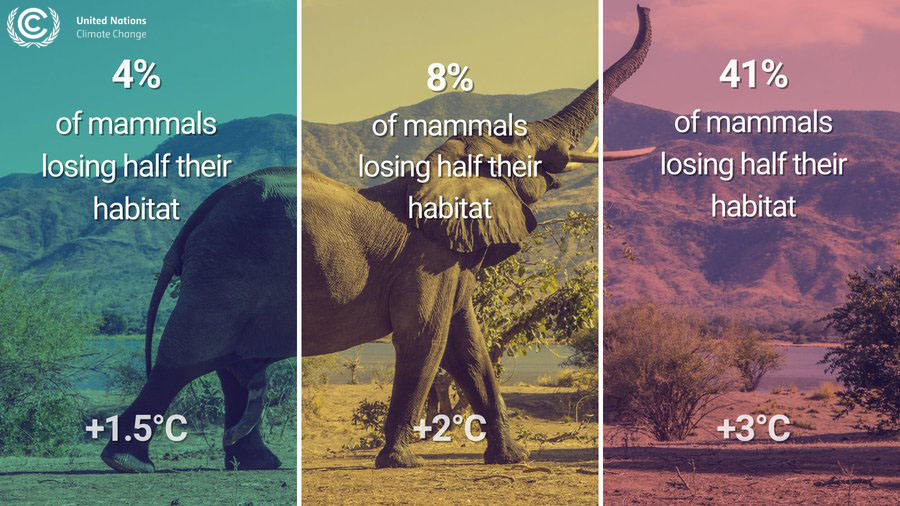
On land, higher temperatures have forced animals and plants to move to higher elevations or higher latitudes, many moving towards the Earth’s poles, with far-reaching consequences for ecosystems. The risk of species extinction increases with every degree of warming.
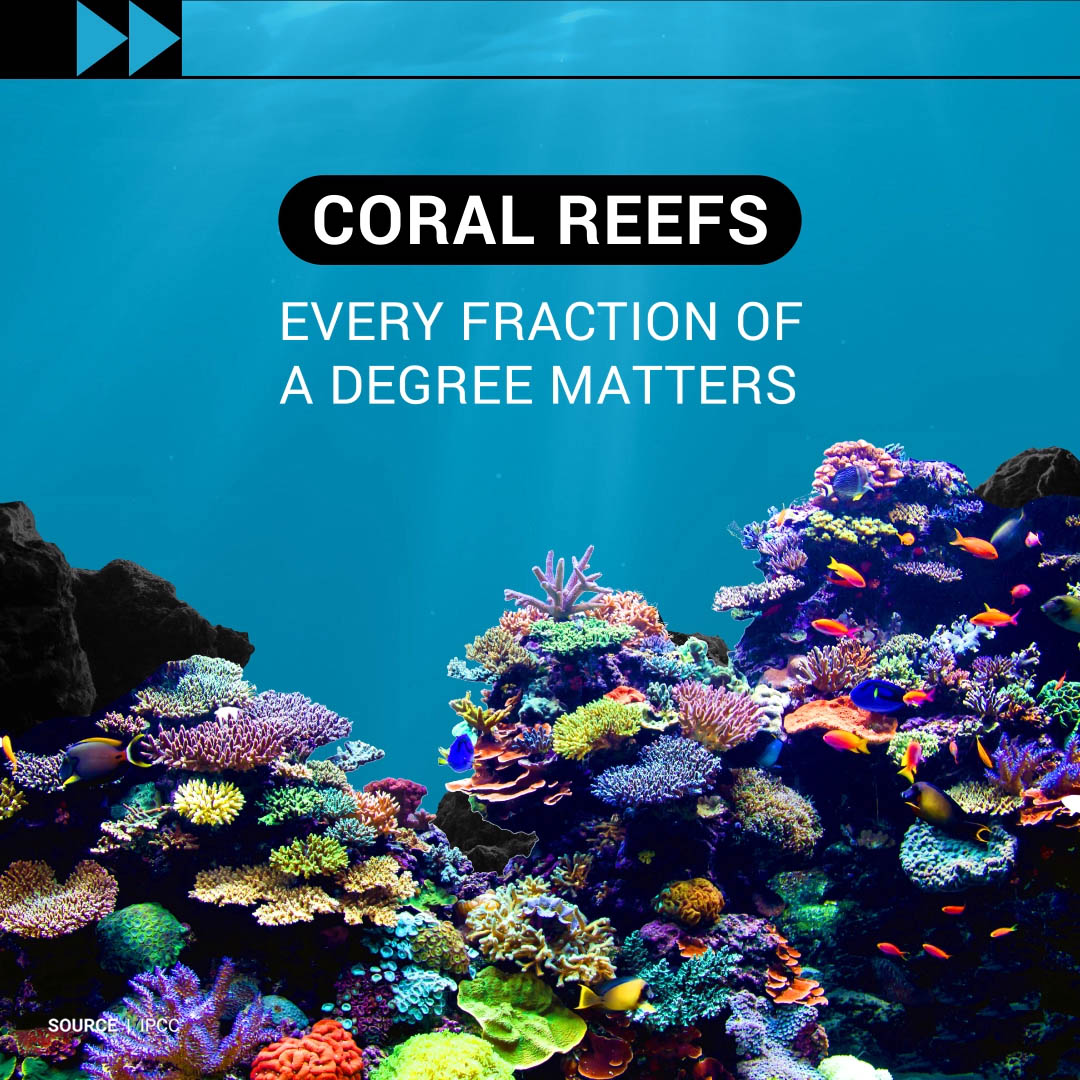
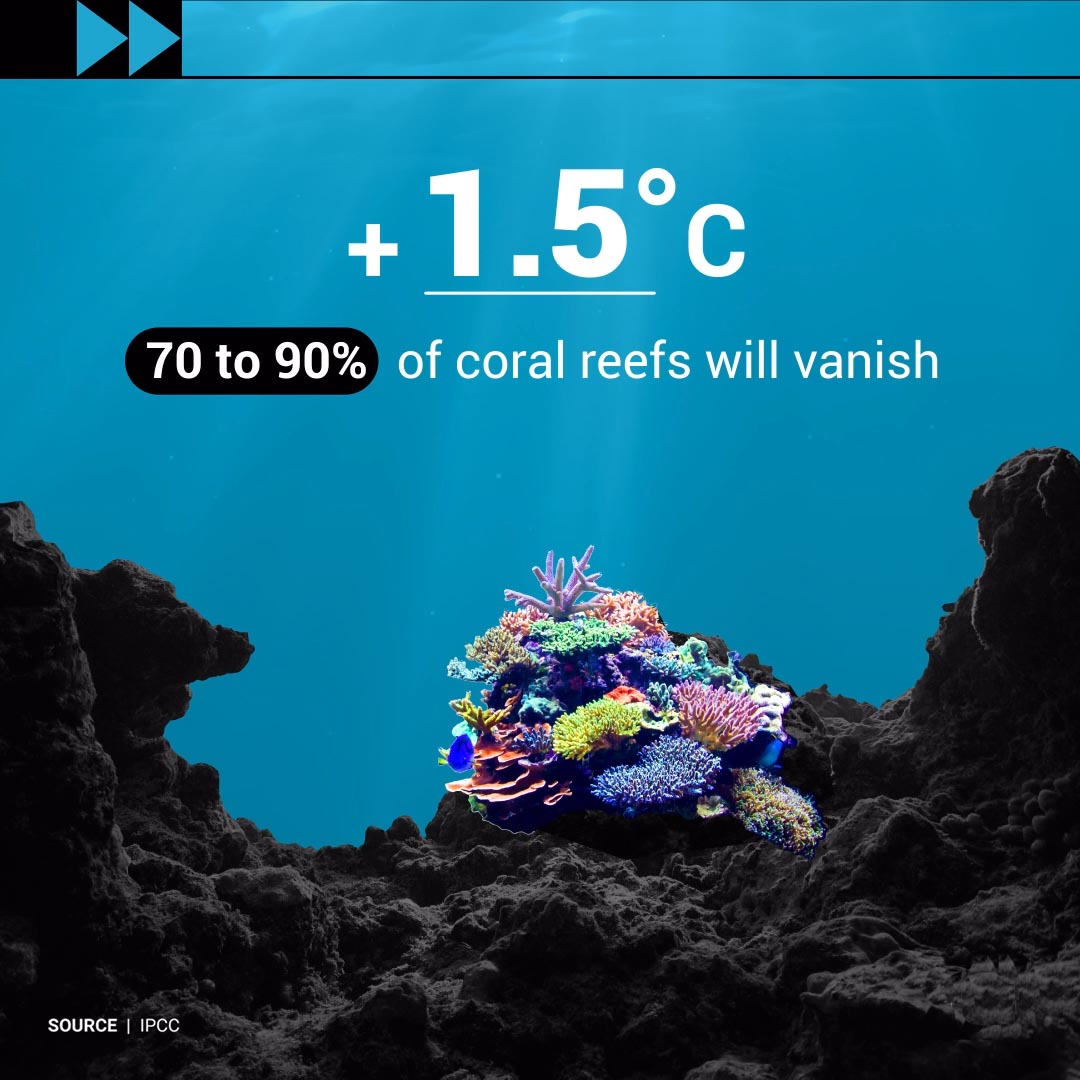
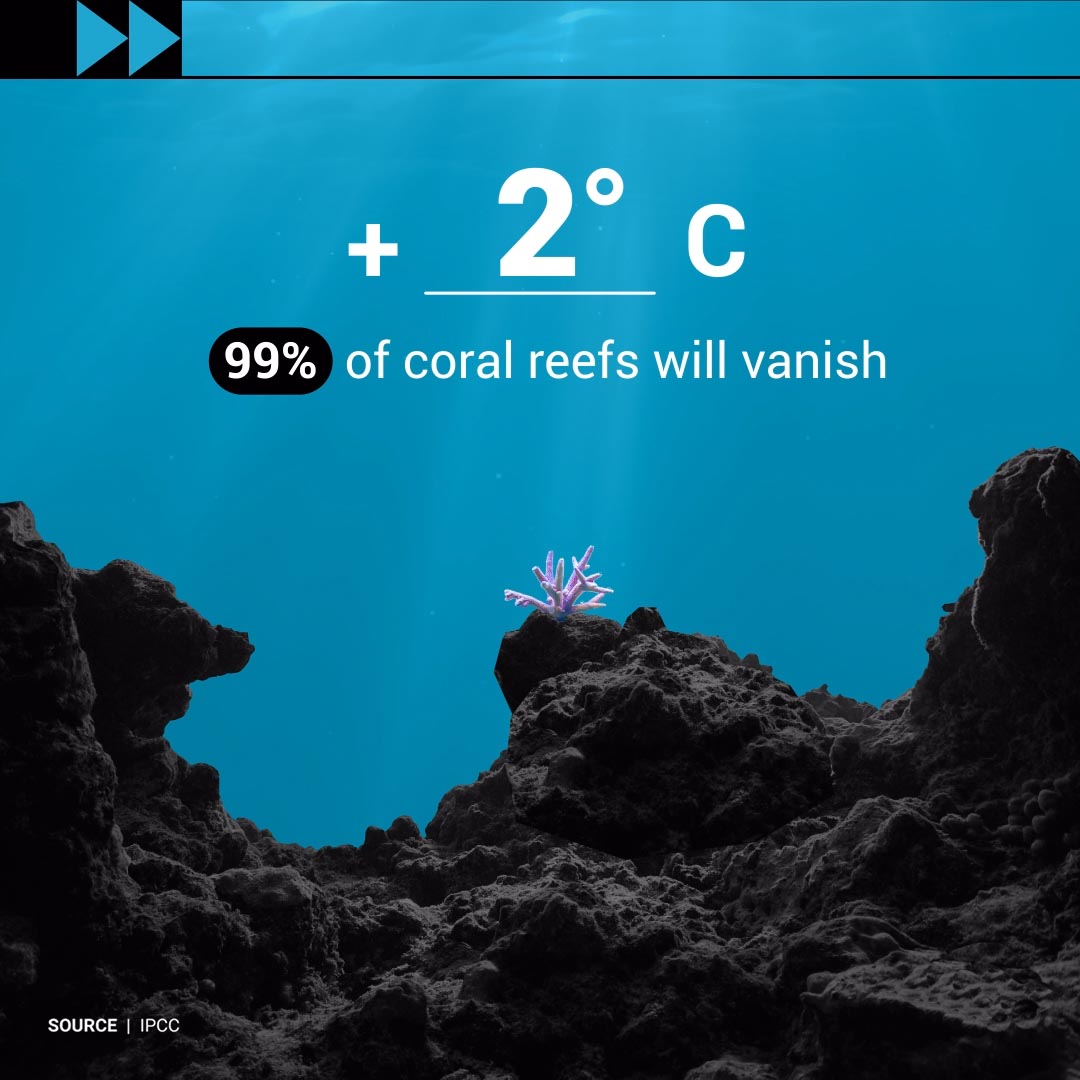
In the ocean, rising temperatures increase the risk of irreversible loss of marine and coastal ecosystems. Live coral reefs, for instance, have nearly halved in the past 150 years, and further warming threatens to destroy almost all remaining reefs.
Overall, climate change affects the health of ecosystems, influencing shifts in the distribution of plants, viruses, animals, and even human settlements. This can create increased opportunities for animals to spread diseases and for viruses to spill over to humans. Human health can also be affected by reduced ecosystem services, such as the loss of food, medicine and livelihoods provided by nature.
Why is biodiversity essential for limiting climate change?
When human activities produce greenhouse gases, around half of the emissions remain in the atmosphere, while the other half is absorbed by the land and ocean. These ecosystems – and the biodiversity they contain – are natural carbon sinks, providing so-called nature-based solutions to climate change.
Protecting, managing, and restoring forests, for example, offers roughly two-thirds of the total mitigation potential of all nature-based solutions. Despite massive and ongoing losses, forests still cover more than 30 per cent of the planet’s land.
Peatlands – wetlands such as marshes and swamps – cover only 3 per cent of the world’s land, but they store twice as much carbon as all the forests. Preserving and restoring peatlands means keeping them wet so the carbon doesn’t oxidize and float off into the atmosphere.
Ocean habitats such as seagrasses and mangroves can also sequester carbon dioxide from the atmosphere at rates up to four times higher than terrestrial forests can. Their ability to capture and store carbon make mangroves highly valuable in the fight against climate change.
Conserving and restoring natural spaces, both on land and in the water, is essential for limiting carbon emissions and adapting to an already changing climate. About one-third of the greenhouse gas emissions reductions needed in the next decade could be achieved by improving nature’s ability to absorb emissions.
Climate Change Time Machine by NASA
https://climate.nasa.gov/interactives/climate-time-machine